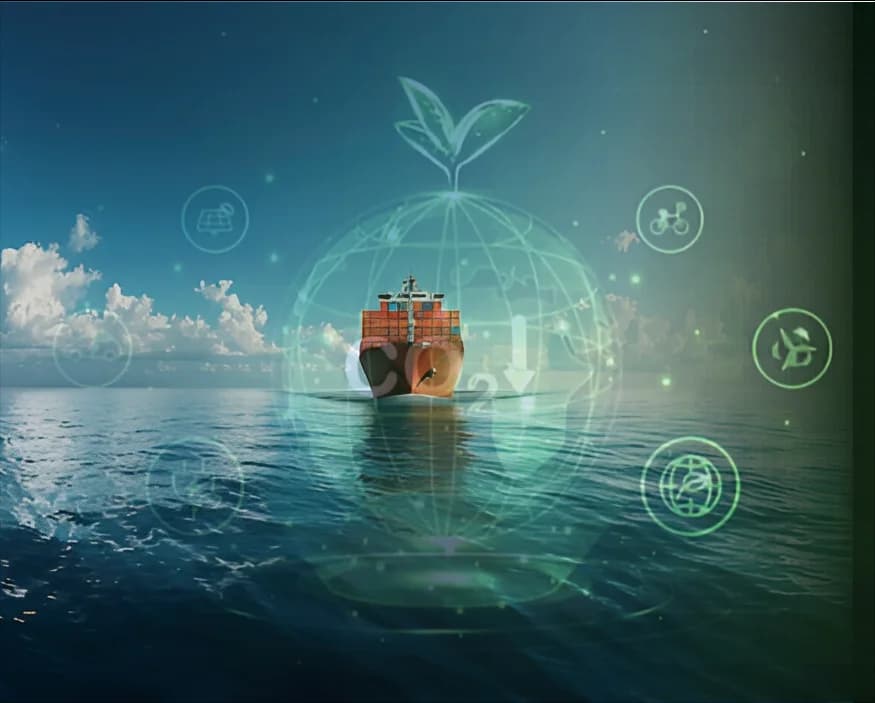
As global environmental regulations tighten, the maritime industry is under increasing pressure to reduce its carbon footprint. The International Maritime Organization (IMO) has set ambitious targets to cut greenhouse gas (GHG) emissions by at least 50% by 2050 compared to 2008 levels. Achieving these goals requires a fundamental shift towards sustainable practices, including alternative fuels, energy-efficient ship designs, and advanced propulsion systems.
The Role of Alternative Fuels
One of the most promising pathways to decarbonization in the maritime industry is the adoption of alternative fuels that produce fewer emissions than traditional marine diesel oil (MDO) and heavy fuel oil (HFO). Key options include:
- Liquefied Natural Gas (LNG): LNG is widely regarded as a transitional fuel, offering a reduction in carbon dioxide (CO₂) emissions by up to 25% compared to conventional fuels. However, concerns remain regarding methane slip—unburned methane emissions that can contribute to global warming.
- Hydrogen and Ammonia: Both hydrogen and ammonia are considered zero-emission fuels when produced using renewable energy. Hydrogen can be used in fuel cells or combusted in modified engines, while ammonia offers high energy density and compatibility with existing infrastructure.
- Biofuels: Derived from sustainable sources such as waste oils and algae, biofuels can be a drop-in replacement for traditional fuels without requiring significant modifications to existing ships.
Energy-Efficient Ship Designs and Propulsion Systems
In addition to alternative fuels, energy-efficient ship designs and propulsion systems play a crucial role in decarbonization. These include:
- Air Lubrication Systems: Creating a layer of air bubbles along a ship's hull reduces drag and improves fuel efficiency.
- Wind-Assisted Propulsion: Technologies such as rotor sails and kite sails harness wind energy to supplement engine power, cutting fuel consumption.
- Battery and Hybrid Systems: Fully electric or hybrid-electric propulsion systems, often coupled with renewable energy sources, are gaining traction in short-sea shipping and ferry operations.
Challenges and Opportunities in Achieving Net-Zero Emissions
Despite the promising advancements, decarbonizing maritime operations presents significant challenges:
- High Initial Costs: Transitioning to alternative fuels and advanced propulsion technologies requires substantial investment in retrofitting existing vessels or building new ones.
- Infrastructure Development: The widespread adoption of new fuels like hydrogen and ammonia depends on the development of global bunkering and storage facilities.
- Regulatory Uncertainty: While the IMO and various national governments are pushing for stricter emission controls, evolving regulations create uncertainty for shipowners and operators.
On the other hand, companies that proactively invest in green technologies can benefit from:
- Regulatory Compliance and Incentives: Early adopters of sustainable solutions may receive tax benefits, subsidies, and priority berthing at green ports.
- Competitive Advantage: As environmental concerns influence customer preferences, sustainable shipping practices can enhance a company's reputation and market positioning.
- Long-Term Cost Savings: Improved fuel efficiency and reduced maintenance costs associated with clean energy technologies lead to financial benefits over time.
The maritime industry stands at a pivotal moment where embracing innovation and sustainability will shape its future. By investing in green technologies, shipping companies can not only meet regulatory demands but also secure long-term profitability in a rapidly changing industry.